

Parasitize
One of Nature's Own Monsters

Happy First Day of Spring!
This original horror flash fiction piece is about the terror of transformation inspired by a real life monster found in nature - the Tachinid Fly! The story is part of the Spring Fever horror writing event hosted by Garen Marie and the TiF Team.
THE THEME : Horror in bloom. Buds bursting, new life waiting to shiver up from the soil.
When my children were young, we were obsessed with butterflies, still are, really. During our early insect adventures, we witnessed a particularly gnarly parasite annihilate a Monarch chrysalis. We were forever changed by this brutal infestation. I hope this bit of fiction does the terrible, tachinid fly justice.
If you get grossed out easily, this one is not for you.
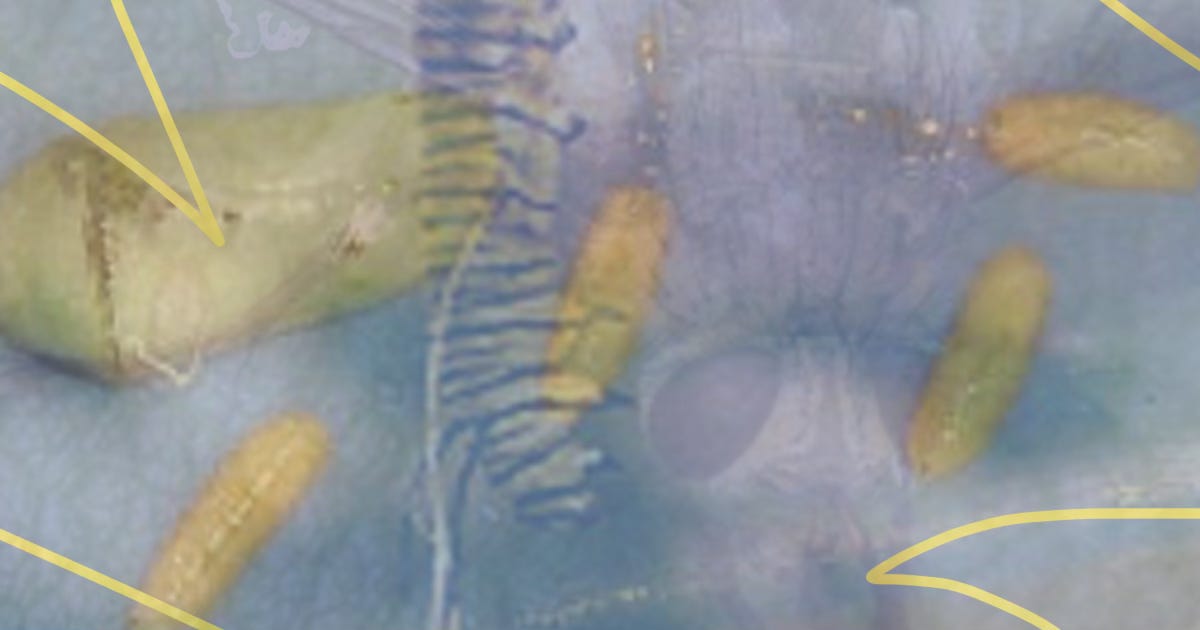
Parasitize
Opposing mandibles masticate matter, toothed jaws crunching cellulose, grinding and pulping plant flesh. This voracious chomping strips the milkweed, leaving only punctured stems. The wilting plant’s milky sap drips, drips, drips onto its destroyer’s discarded exoskeleton. A black fly lands briefly on the shriveled molt, rubbing its front legs together before zipping away.
This dark companion joins the ravenous eating machine during its fourth instar, flitting to-and-from its endlessly gnawing target. The calculating mother lands on the plump white, black, and yellow striped flesh and plants tiny white specs one-by-one in tidy rows. Through the whole macabre dance, I crouch in the long grass nearby, itchy and damp, swatting the same species of flitting flies off my shoulder and neck. The blazing sun peeks out from behind the only cloud in the sky, burning my exposed, already pink shoulders, as I document this insidious infestation with the company’s old Nikon. I sneeze and snap, sneeze and snap, while the faint, acrid smell of my own sweat mixes with that of the pollen and soil. With each tiny, carefully placed gift, the tachinid fly slowly covers the entire backside of the constantly chewing, extremely vulnerable larva. Glancing to the sky, I attempt to summon a black-backed oriole who could put a quick end to this horror. The call goes unanswered, and the fly continues its devilish deed.
When the caterpillar’s skin sags, heavy with the fly’s little eggs, I carefully separate the leaf it sits upon from the plant’s stem and gently place the doomed critter in a small, plastic container, sealing it in with a perforated lid. As I struggle to a standing position, limbs heavy and clumsy, the flies in the area swarm, flitting and darting, landing and fleeing. Quickly, I wobble to the covered porch, away from the pests.
The swarm buzzes behind us and several of the flies land on my arm, then a couple on the nape of my neck, sending a shudder through my body that forces a bit of bile to the back of my throat. Picking up speed, I shake the grotesque flies off and slam the screen door to the porch behind me, barely saving myself. Unfortunately, it’s already too late for the larva I carry. It mindlessly polishes off the last of the leaf it had just moments ago been perched upon.
As I struggle to catch my breath and wipe sweat from my brow, the bodies of dozens of these parasites swat against the screen, over-and-over, attempting to push through the mesh, driven to lay even more of their eggs on their larvae’s soon-to-be host. This fly species has always been persistent but this year their behavior has shifted to aggression. That’s why the office sent me here. I’ve been studying the increased aggression and the influx of this parasitic fly in the region for the past month. Their population has multiplied by thirty percent in one season, completely unheard of, and if it continues, threatens to wipe out several butterfly and moth species.
Inside the screened porch, I place the latest specimen next to the hundreds of caterpillars in various stages of infection from the tachinid fly’s eggs. Strings resembling dental floss dangle from the browning chrysalides hanging in the netted enclosures above. At the end of several of those strings hang tan, oval maggots that have emerged from their now dead host. In one of dozens of containers below it, a shriveled up, blackened shell of a Monarch larva expands and wiggles strangely as more emerging maggots squirm and tumble over each other, oozing from this caterpillar’s final shedding.
I shudder. Goosebumps travel up my arm and legs as the maggots gesticulate into the fresh air. I’ve seen this happen hundreds of times, but it never grows less vile and disturbing. I snap a few resentful photos and jot down some notes on the nearby pad connected to those specimens. I went into this field to study something beautiful, instead . . .
My stomach releases a loud and impressive grumble. Believe it or not, I’m starving. Time for the other half of my torta from lunch.
Even after scrubbing my arms and hands until at least two layers flaked away, my skin still itches so intensely that the only relief may be to peel the rest off. It’s been like this for weeks. Scratch. Scratch. Scratch. I plod toward the refrigerator of the small research cabin, obsessing about shedding my blazing, blotchy skin and gorging myself.
Clutching the half-eaten sandwich from lunch, I plop down on one of the four wooden chairs around a cheap fold-up card table. After a few, fast and furious bites, lettuce falling from my lips and crumbs covering my Led Zeppelin tee, a string catches between my teeth. It tastes like something artificially sweet has rotted, like a moldy sour patch. The string is stuck on my index finger, the tip of which has darkened. I rub the brown blotch on my finger, but the spot remains. I pull it free from my teeth, but it remains glued to the tip of my finger, and its catches on something in the back of my throat.
As I lean in to examine the string closer and tug again, my stomach lurches so violently, my body moves with it. An intense, painful pressure shoots out from deep within my organs toward my lower back. A numbness follows that excruciating pain, and I feel my consciousness floating away as I bring the torta to my lips for another bite. Before I can chomp down, my body spasms. I jerk back and forth. The chair wobbles. I drop the sandwich, and its insides splatter out on the floor. Mine feel like they are about to join the shredded lettuce, tomato, and turkey. Howling, I clutch my stomach and roll off the chair, falling to the ground with a thud, writhing and squirming in the toppings and two sides of an oily bun. I involuntarily attempt to mouth a piece of the bun, driven by a maddening hunger.
I bite my lip so hard, blood drips down my chin and slides down the back of my throat. I feel something slithering from deep within my esophagus toward that blood and try to gag it down, but it reaches my mouth, gloaming onto my tongue. My mind registers a tugging sensation on the tip of my finger. I pull hard on the string, and it snaps out of my fingertip. I release a muffled cry and yank on the string again, watching cross-eyed as an attached slimy maggot emerges through my lips and plops out onto my chest, a trail of saliva still keeping us connecting. I wipe my lips slowly, wide eyes tracking the wriggling creature. I inhale sharply when I feel something else wriggling back from under my shirt.
Trembling, teeth clenched, I lift up the bottom of my tee with my one free hand, revealing many, many small, oval bulges pushing upward across my stomach and toward my chest. The bulges pulsate, and the pain returns, followed by the numbness and the mental disconnect. I stare up at the ceiling and spot a singular fly on the ceiling. My eyes dart from the fly to the lumps throbbing all over my body. The skin on my stomach stretches and thins as more of those things push outward, the singular maggot on my chest twisting and flopping toward the lumps. My breath is shortening, and the pulsing intensifying. My flesh is discolored, purple and black, now that they are all close the surface. I can’t move or think straight, just watch, along with the fly, as new life chews its way out of me, my first and last shedding.
I wish I had the strength to jot down a last note, a warning . . .
. . . the tachinids have definitely become too aggressive.
The room darkens to the plop, plop, plop sounds of the fly’s babies hitting the wood floor around me.
I did have a larvae removed from my arm once, it plopped out, no knifes involved, only a pinch from my mother.
uuuuuuUUUUUUURRRRGGGHHHH!
🤢🤢🤮😳😳😳😱☠️
JUST my worst fear. Thanks.
wonderfully realised!